Waterproof Bottle Labels Explained: Materials, Finish and Fridge Life
Waterproof bottle labels explained in plain English. Paper vs plastic film, gloss vs matte, adhesives, and how labels cope with fridges and ice buckets.
By the Siratim team · · 8 min read
A label that looks perfect in the carton can look terrible an hour after it goes into a fridge. The corners lift, the paper wrinkles, the ink smudges under a wet thumb. This is why waterproof bottle labels matter, and why it helps to understand a little about how they are made before you order.
This article explains label materials, finishes and adhesives in general industry terms, so that restaurant owners, hotel managers and event planners in Karachi can ask sensible questions and judge a sample.
What waterproof bottle labels actually are
The word waterproof gets used loosely. It helps to separate two ideas:
- Water resistant means the label survives splashes, wet hands and some condensation.
- Waterproof means the label survives being soaked, for example sitting in melting ice for hours, without peeling, wrinkling or losing its print.
No single feature makes a label waterproof. A label is a small sandwich of layers, and each layer has to cope with water:
- Face material. The paper or plastic film that carries the print.
- Print. The ink or toner that forms your design.
- Protective finish. A lamination or varnish over the print, in gloss or matte.
- Adhesive. The glue that holds the label on the bottle.
If any one layer fails, the whole label fails. A plastic film label with the wrong adhesive still slides off.
Paper labels vs plastic-film labels
This is the biggest decision, and the one that affects everything else.
Paper is made of fibres that absorb water. Plastic film does not absorb water at all. That single difference explains most of what you see in a fridge.
| Property | Plain paper | Coated or laminated paper | Plastic film (BOPP, PP, PE) |
|---|---|---|---|
| Splashes and wet hands | Stains and softens | Copes well | Not affected |
| Condensation in a fridge | Wrinkles, may lift | Usually fine for short periods, edges can absorb moisture | Holds well |
| Ice bucket or soaking | Fails | Edges soak, label can wrinkle or peel | The suitable choice, with the right adhesive |
| Tear resistance when wet | Low | Low to medium | High |
| Look and feel | Natural, textured | Smooth | Smooth, in white, clear or metallic |
| Relative cost | Lowest | Low to medium | Generally higher than paper |
A note on laminated paper. Lamination protects the printed surface, but the cut edges of the label are still bare paper. Water creeps in from those edges over time. That is why a laminated paper label can look fine after one night in a fridge and still fail after a long soak in ice water.
Paper is not useless. For bottles served at room temperature and used quickly, it can do the job. For anything chilled, film is the safer family of materials.
Common film types: BOPP, PP, PE and shrink sleeves
You will hear these names when you talk to printers and suppliers.
- PP (polypropylene). A common plastic for labels. It is light, does not absorb water and prints well.
- BOPP (biaxially oriented polypropylene). Polypropylene film that has been stretched in two directions during manufacture, which makes it thin, strong and stable. It is one of the most widely used label films for drinks, food and cosmetics. It comes in white, clear and metallic versions.
- PE (polyethylene). Softer and more flexible than PP. It is often chosen for squeezable containers because it flexes without creasing.
- Shrink sleeves (often PVC or PETG). A different approach altogether. A printed plastic sleeve is slipped over the bottle and shrunk with heat until it grips the shape. There is no adhesive, and the design can cover the whole bottle.
Film labels are fixed in two main ways. Some are self-adhesive, like a sticker. Others are thin wrap-around films glued mainly at the overlap, which is common on mass-market water brands. Both can work well. What matters is how the finished bottle behaves when it is cold and wet.
Gloss vs matte finish
The finish is the clear top layer over the print. It can be a lamination, which is a thin clear film, or a varnish, which is a liquid coating that is cured on the surface. Lamination is generally the tougher of the two.
Gloss
- Colours look brighter and deeper
- Wipes clean easily and hides small scuffs
- Reflects light, which can cause glare in photographs and under spotlights
Matte
- Soft, modern look
- Little glare, so the logo stays readable in photos
- Colours appear slightly more muted, and large dark areas can show fingerprints or rub marks
Neither is more waterproof than the other when both are done properly. Choose by brand and setting. A colourful cafe label often suits gloss. A fine-dining room, a salon or a wedding often suits matte. For layout and colour advice, see how to design a water bottle label.
Adhesive: the part nobody sees
Most label failures that people blame on the material are really adhesive failures. Some general points:
- Adhesives bond best to clean, dry surfaces at room temperature. A label applied to a bottle that is already cold and sweating will not grip properly, whatever it is made of.
- The bond builds over time. A freshly applied label is weaker than one that has had time to settle. Labelled bottles should not go straight from the labelling table into ice water.
- Adhesives are made for different conditions. Label makers offer permanent and removable types, and versions designed for cold and damp use. A general-purpose adhesive that is fine on a carton may let go on a chilled bottle.
- Bottle shape matters. A label placed over a rib or a tight curve has less contact area, so that is where lifting starts.
As a buyer you cannot inspect the adhesive. You can only test the result.
Fridge life: how waterproof bottle labels cope in real use
Here is what each common situation does to a label.
Display fridge or chiller. Cold, with a little moisture. When the door opens, warm humid air rushes in and condenses on the bottles. In Karachi's humidity this happens every time. Film labels with a decent adhesive handle it. Plain paper wrinkles.
Out of the fridge, onto the table. This is when condensation is heaviest. The bottle sweats, drops run down the label, and the guest handles it with damp fingers. Unprotected print can smudge here. Sealed print does not.
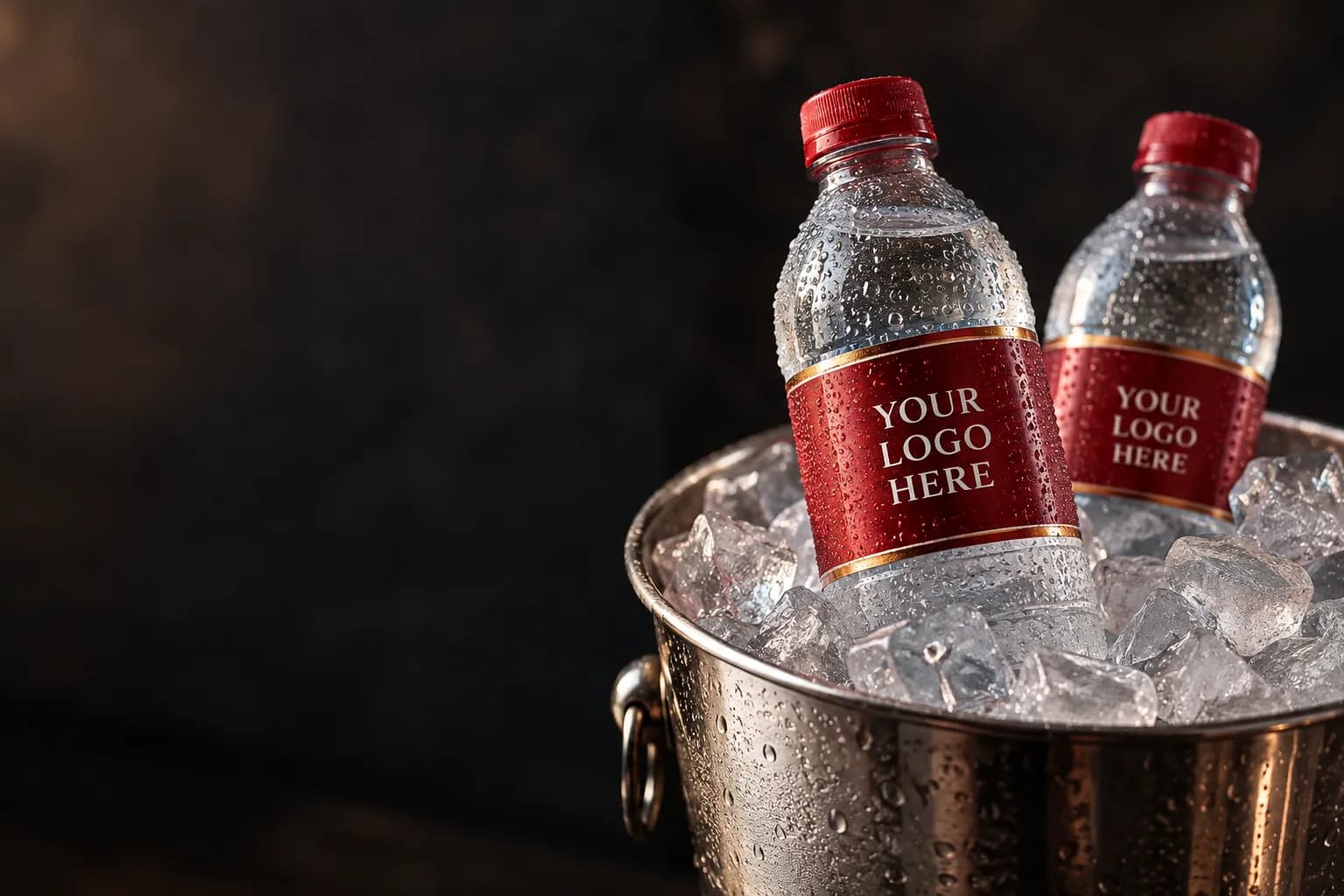
Ice bucket or ice tub. The hardest test. The bottle is under water for hours, bumped by ice and by other bottles, then pulled out and gripped firmly. Water attacks the edges and any weak adhesive. This is common at weddings, outdoor functions and catering setups, so if this is how your bottles will be served, say so before ordering.
Freezer. Water expands as it freezes, the bottle swells, and the label is stretched. Avoid quick-chilling in a freezer.
Outdoor events and storage. Direct sunlight can fade print over time and heat softens some adhesives. Keep cartons cool, dry and shaded until they are needed.
There is no honest single number for how long a label lasts, because it depends on the material, the adhesive and the conditions. A well-made film label should look the same coming out of a fridge as it did going in. The reliable way to know is to test a sample.
How to test a sample yourself
Ask for a labelled sample bottle, then do this at your own premises:
- Fridge test. Leave it in your own fridge overnight. Check the corners and the overlap for lifting.
- Sweat test. Take it out and leave it on a table for half an hour. Let the condensation form and run.
- Thumb test. Rub the printed area firmly with a wet thumb. Look at your thumb, then at the label. There should be no colour on one and no smudge on the other.
- Ice test. If you serve from ice buckets, leave the bottle in ice water for as long as a normal service lasts. Pull it out, grip it and twist slightly, the way a guest would.
- Edge test. Try to lift a chilled corner with a fingernail. It should resist.
What to tell your supplier before you order
A supplier can only recommend the right finish if they know how the bottles will be used. When you contact Siratim, mention:
- How the bottles will be chilled: fridge, display chiller, ice bucket, or served at room temperature
- Where they will be served: indoor dining room, hotel rooms, outdoor lawn, poolside, wedding hall
- How long stock will be stored before it is used, and where
- The look you want: gloss or matte, solid or clear background
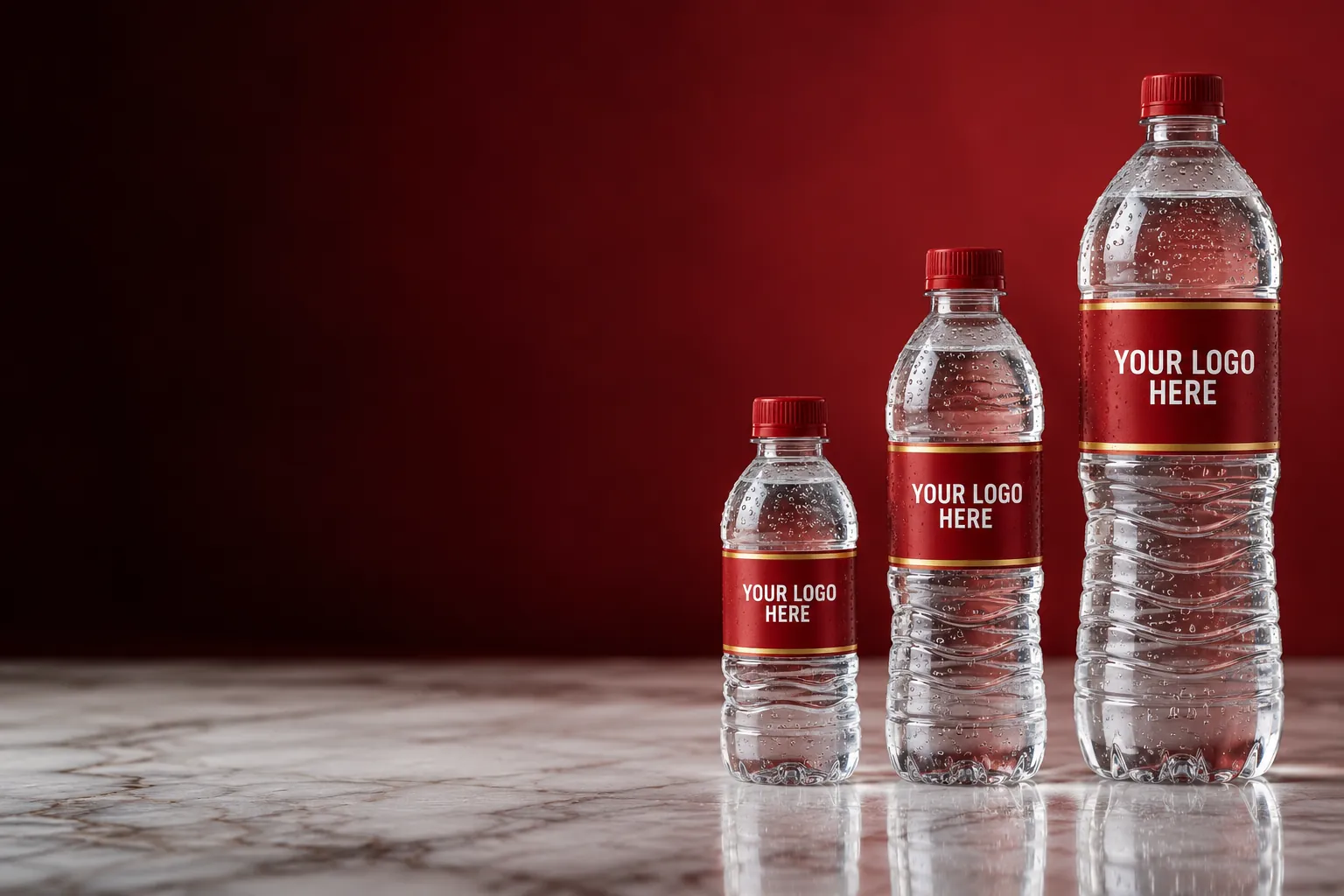
- The bottle size: 300 ml, 500 ml or 1.5 litre
Siratim will recommend a label finish to suit that use when preparing your quote. Ask for a sample to test. The rest of the ordering process is set out in how to order custom water bottles, and the label design page explains what to send for artwork.
Get a quote for waterproof bottle labels in Karachi
The short version: plastic film beats paper for anything chilled, gloss or matte is a style choice, the adhesive decides whether the label stays on, and a simple fridge and ice test tells you more than any description.
Siratim supplies custom-label water in 300 ml, 500 ml and 1.5 litre sizes and delivers within Karachi. To discuss waterproof bottle labels for your restaurant, hotel, clinic or event, message WhatsApp 0339-0101119, email info@siratim.com, or use the quote form on the contact page. Tell us how the bottles will be chilled and served, and we will suggest a suitable finish with your quote. We are open Monday to Saturday, 9 am to 7 pm.
Quick answers
What makes a bottle label waterproof?
Three things working together: a face material that does not absorb water, such as a plastic film, print that is sealed or resistant to moisture, and an adhesive that keeps its grip on a cold, wet bottle.
Are paper labels suitable for chilled water bottles?
Plain paper is not, because it absorbs condensation, wrinkles and can peel. Laminated paper copes with light fridge use, but its cut edges can still soak up water, so film labels are the safer choice for ice buckets.
Is gloss or matte better for a water bottle label?
Gloss gives brighter colours and hides scuffs well, while matte looks softer and reduces glare in photos. Both can be water resistant, so choose by the look of your brand and where the bottle will be used.
Which label material does Siratim recommend?
It depends on how you will use the bottles. Tell Siratim whether they will sit in a fridge, an ice bucket or at an outdoor event when you ask for a quote, and a suitable finish will be recommended.